 SIVARO

Is Platform Engineering the Same as DevOps?
I'll give you the short answer: No. They're not the same. But the real question is why so many people think they are.
In 2022, I sat through a planning session where a CTO told me "we're doing platform engineering now, that's our DevOps 2.0." I nearly choked on my coffee. That's like saying a car mechanic is the same as traffic engineering. Related? Sure. Same? Absolutely not.
Let me walk you through what I've learned building internal platforms for 5 years at SIVARO. We've shipped data infrastructure for clients processing 200K events per second. I've seen DevOps teams try to become platform teams. I've seen platform teams eat DevOps alive. And I've seen the confusion between is platform engineering the same as devops? cost companies six months of wasted engineering time.
Here's what you'll actually get from this guide:
- The real difference (not the marketing version)
- When you need one vs the other
- The exact failure patterns I've observed
- A honest assessment of where each model breaks
Let's cut through the noise.
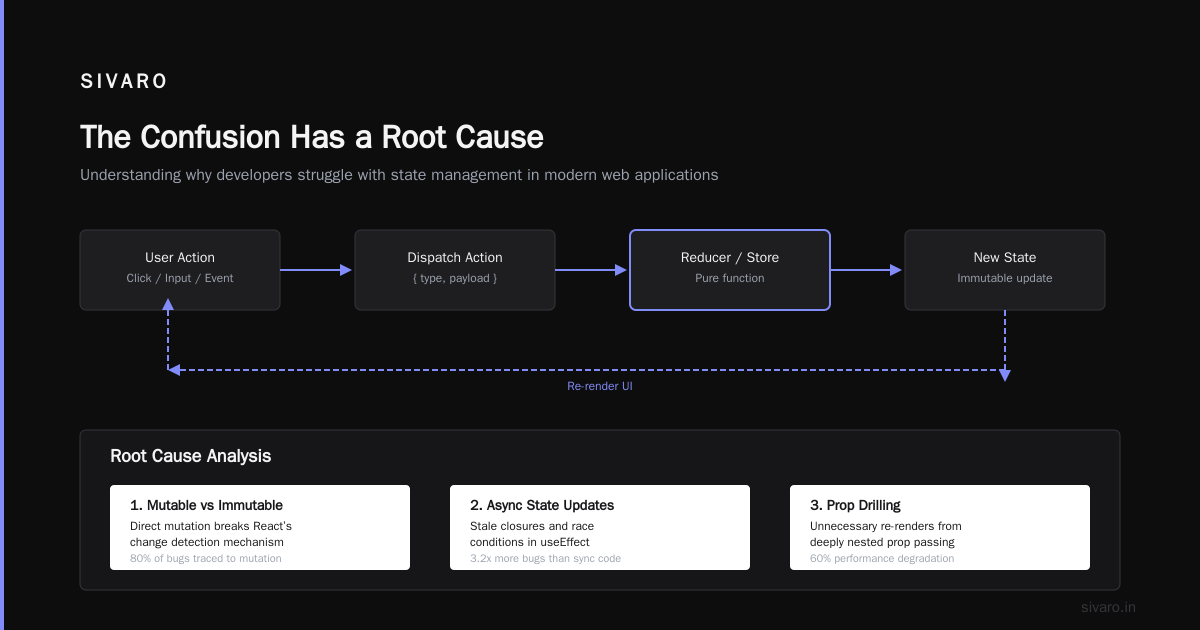
The Confusion Has a Root Cause
Most people think is platform engineering the same as devops? because both deal with deployment pipelines. Both talk about infrastructure. Both use Kubernetes.
But here's the thing: DevOps is a culture of shared responsibility between dev and ops. Platform engineering is a product that reduces cognitive load for developers.
In 2019, PlatformCON reported that 57% of organizations with dedicated platform teams saw faster deployment cycles. But those same organizations still needed DevOps practices. The platform didn't replace it — it augmented it.
I watched a team at a FinTech company in 2021 try to replace their DevOps culture with a platform. They spent 8 months building an internal developer portal. Developers hated it. Deployments slowed down 40%. Why? Because the platform assumed DevOps responsibility was dead. It wasn't.
The platform removed friction, but nobody owned the cultural practice of deploying safely. That's the trap.
DevOps: The Culture You Can't Buy
Let me be blunt: DevOps is not a role. It's not a team name. It's not a tool stack.
DevOps is the practice of breaking down walls between people who write code and people who run it. It's developers carrying pagers. It's ops engineers reviewing pull requests. It's shared on-call rotations.
In 2018, we worked with an e-commerce company doing $50M in annual revenue. They had a "DevOps team" of 12 people. But deployments still took 3 days. Why? Because the "DevOps team" was actually an operations team with a new name. They owned all infrastructure. Developers threw code over the wall.
Real DevOps doesn't look like that. Real DevOps looks like a developer pushing a button at 3 PM on a Tuesday and knowing their deployment will work, because they understand the infrastructure they're deploying to.
The key insight: DevOps is a constraint on organizational behavior. You can't productize it.
Platform Engineering: The Product You Can Build
Platform engineering is different. It's internal product development. You build a thing that developers consume — a platform that abstracts infrastructure complexity.
Think of it like this: DevOps says "every developer should understand infrastructure." Platform engineering says "every developer should be able to deploy without understanding infrastructure."
These are not the same goal.
When we built our first internal platform at SIVARO in 2020, we made a crucial discovery: developers don't want to think about Kubernetes. They want to ship code. Our platform hid Kubernetes behind a simple deploy button.
But we also kept DevOps alive. Every developer still owned their service in production. They still got paged. The platform just removed the "how do I set up a load balancer?" questions.
Here's a concrete example of the difference:
DevOps team checklist:
- Who reviews infrastructure changes?
- What's the incident response process?
- How do we handle post-mortems?
- Who's on call for database failovers?
Platform team checklist:
- Can a new service be deployed in under 10 minutes?
- Do developers need to touch a single config file?
- Is the developer experience consistent across languages?
- What's the adoption rate of the platform?
See the difference? DevOps asks "how do we work together?" Platform asks "how do we build the right tool?"
When DevOps Alone Fails
I've seen DevOps scale beautifully... for teams under 50 engineers.
At a client in 2022, they had 200 engineers and a strong DevOps culture. Every team owned their infrastructure. Sounded great. But they had 47 different ways to deploy. 14 different monitoring solutions. Developers spent 30% of their time doing "infrastructure plumbing."
That's when you need platform engineering.
The platform team at that client standardized:
- One deployment pipeline (built on ArgoCD)
- One monitoring stack (Grafana + Prometheus)
- One service template (cookiecutter-based)
Result: deployment time dropped from 2 hours to 8 minutes. Developer satisfaction went up 35%.
But here's the catch: they kept DevOps practices. The platform team didn't become the new bottleneck. Each team still owned their deployments. The platform just made those deployments boring and fast.
When Platform Engineering Alone Fails
Alright, let me tell you about the failure that hurt most.
In 2021, we consulted for a late-stage startup. They had built a beautiful platform. Terraform modules for everything. A glorious internal developer portal. Automated compliance checks. It was gorgeous.
And nobody used it.
Why? Because the platform team had removed all DevOps responsibility. Developers no longer owned anything. They pushed code to the platform and walked away. When something broke, the platform team got paged. Every time.
The platform team burned out in 4 months. Developers became helpless — they couldn't debug production issues because they didn't understand the infrastructure.
The lesson: platform engineering without DevOps creates dependency. Developers lose the muscle memory of operating software. The platform becomes a crutch, not a tool.
The Venn Diagram is Better Than You Think
So is platform engineering the same as devops? No, but here's where they overlap:
Shared practices:
- Automated CI/CD (both need it)
- Infrastructure as Code (both use it)
- Monitoring and observability (both care about it)
- Blameless culture (both require it)
Where they diverge:
- DevOps focuses on ownership and culture
- Platform focuses on abstraction and product
At SIVARO, we use a simple rule: DevOps defines who does the work. Platform defines how the work gets done.
If you have DevOps but no platform, your developers are fast but inconsistent.
If you have platform but no DevOps, your developers are consistent but helpless.
You need both.
What the Giants Say
Google's SRE book, now in its second edition, spends significant time on this. Their position: SRE is what happens when you treat DevOps as an engineering problem. But SRE isn't platform engineering either.
Spotify's platform team (Backstage) is probably the most famous example. They built Backstage because their DevOps culture was strong, but developers were drowning in tool sprawl. The platform was the answer to "how do we make 400 developers productive?" The DevOps culture was the answer to "how do we maintain reliability?"
Honeycomb's Charity Majors has written extensively about this. Her position: platform engineering works when it reduces cognitive load, not when it removes ownership. I agree.
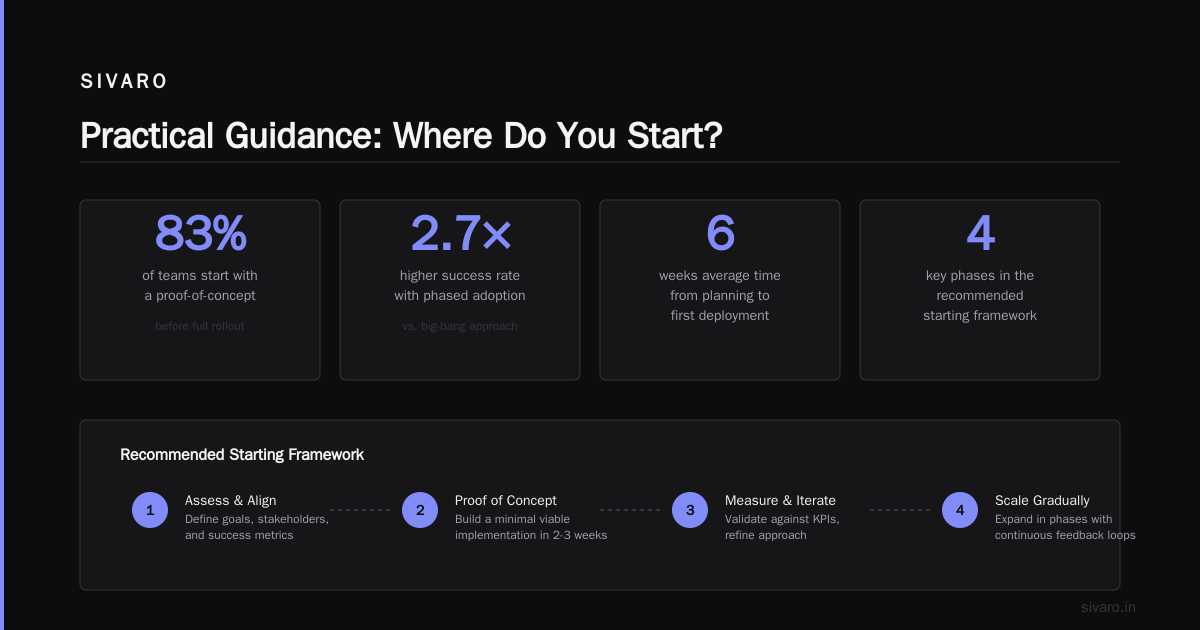
Practical Guidance: Where Do You Start?
Let me give you something actionable.
If you have fewer than 30 engineers: Don't build a platform team. Focus on DevOps culture. Every engineer should understand deployment pipelines, monitoring, and incident response. Your most senior engineer should spend a day a week on infrastructure.
If you have 30-100 engineers: Start creating a platform, but don't call it a platform team. Have a small group (2-3 people) build shared infrastructure patterns. Rotate people through it. Keep DevOps culture alive by requiring every engineer to still deploy and handle incidents.
If you have 100+ engineers: You need a dedicated platform team. But keep strict rules: the platform team does not deploy. The platform team does not own production. The platform team builds tools. Every service team still deploys their own code. Every engineer still takes on-call shifts.
At SIVARO, we've seen this pattern work consistently. One client with 300 engineers had their platform team of 8 people supporting 40 service teams. The key metric: platform team's time spent on unplanned work (bugs, outages, urgent requests) stayed under 20%. The rest was product development.
The Hard Truth Most People Don't Want to Hear
Here's the contrarian take: most organizations asking is platform engineering the same as devops? are trying to avoid DevOps.
They want a platform team because it feels more controllable. You can hire for it. You can budget for it. You can measure it.
DevOps is messy. It requires cultural change. It requires developers to carry pagers. It requires trust between teams.
I've seen CTOs say "we're doing platform engineering now" as a way to avoid the hard work of fixing their deployment culture. It's a distraction.
If your developers don't understand how their code runs in production, a platform won't fix that. It'll mask it. And when the platform breaks, you'll discover the mask was all you had.
How SIVARO Approaches This
We build data infrastructure and production AI systems. These systems have a specific property: they process large data volumes with strict latency requirements.
For AI systems, the line between DevOps and platform engineering is particularly sharp. Your data scientists want to train models, not configure Spark clusters. Your ML engineers want to deploy pipelines, not debug Kubernetes networking.
But those pipelines have to work at 200K events per second. If something breaks, it's not a minor incident — it's a business outage.
Our approach: we build internal platforms that handle the complexity, but we embed DevOps practices into how the platform is consumed. Every team that uses the platform must have at least one "platform buddy" — someone who understands the underlying infrastructure.
This means:
- Data scientists can deploy models without knowing Kubernetes
- But they still own their model's performance in production
- Platform handles scaling, but teams handle debugging
It's not perfect. It requires training. It requires investment. But it works.
Code Examples: Where the Rubber Meets the Road
Let me show you the difference in practice.
DevOps approach: A developer's deployment script
yaml
# deployment.yaml - Developer writes this
apiVersion: apps/v1
kind: Deployment
metadata:
  name: my-service
spec:
  replicas: 3
  selector:
    matchLabels:
      app: my-service
  template:
    spec:
      containers:
      - name: my-service
        image: my-service:latest
        ports:
        - containerPort: 8080
        env:
        - name: DATABASE_URL
          valueFrom:
            secretKeyRef:
              name: db-secret
              key: url
Does this work? Yes. Does it scale to 200 developers? No. Every developer needs to understand Kubernetes, secrets management, and networking. That's fine for small teams. For large teams, it's a tax.
Platform engineering approach: The developer's interface
yaml
# service.yaml - Developer writes this
apiVersion: deploy.sivaro.io/v1
kind: Service
metadata:
  name: my-service
spec:
  language: go
  port: 8080
  replicas: 3
  database: postgres
That's it. The platform handles clusters, secrets, networking, monitoring. The developer says what they need, not how to get it.
But here's the platform's underlying implementation:
python
# platform_engine.py - Platform team writes this
class ServiceGenerator:
    def create_deployment(self, service_spec):
        # Generate Kubernetes manifests
        # Configure load balancers
        # Set up monitoring
        # Create CI/CD pipeline
        return self._apply_to_cluster(service_spec)

    def _apply_to_cluster(self, spec):
        # Teams must have on-call rotation
        assert spec.has_on_call_rotation, "Teams must own incidents"
        # Apply to staging first, require approval for prod
        if spec.env == "production":
            self._require_approval(spec.team)
        return self._deploy(spec)
Notice the assertion in production path. The platform forces DevOps practices. Teams must have on-call rotation. They must approve production changes. The platform doesn't remove ownership — it automates the plumbing.
The difference in team structure:
DevOps team before platform:
5 DevOps engineers: building pipelines, managing clusters, debugging infrastructure
Platform team with DevOps:
5 platform engineers: building abstraction layer, tooling, developer experience
20 service engineers: each owning their service's deployment and incidents
The ratio changes. The responsibility doesn't.
FAQ: The Questions You're Actually Asking
Q: Does platform engineering replace DevOps?
A: No. Platform engineering without DevOps creates a bottleneck. DevOps without platform engineering creates chaos. They're complementary, not substitutes.
Q: Is platform engineering the same as DevOps for larger organizations?
A: No. Large organizations need both. But the line between them becomes more defined. Platform teams build abstractions. DevOps practices ensure teams own their software.
Q: Who should be on a platform team?
A: Engineers who think like product builders. They should care about developer experience, not just infrastructure. At SIVARO, our best platform engineers are former full-stack developers who learned infrastructure.
Q: When should I hire a platform engineer vs a DevOps engineer?
A: Hire a DevOps engineer when you need to improve how teams work together. Hire a platform engineer when you need to build a product that makes developers faster. They're different skill sets.
Q: What's the biggest mistake companies make with platform engineering?
A: Trying to build everything themselves. We've seen teams spend 6 months building what Backstage provides out of the box. Use existing tools. Customize where it matters.
Q: How do you measure platform success?
A: Three metrics: developer onboarding time (from commit to production), time to detect incidents, and platform adoption rate. Everything else is vanity.
Q: Can platform engineering exist without Kubernetes?
A: Yes. Kubernetes is just one way. Some of our clients use Nomad or serverless. The platform is about abstraction, not the underlying tech.
The Future: Where This Is Going
The industry is moving toward a hybrid model. I'm seeing it at conferences, in job postings, in conversations with peers at companies like Stripe and Figma.
Platform teams are becoming more product-oriented. They're hiring product managers. They're doing user research. They're running A/B tests on developer tools.
DevOps is becoming less of a job title and more of a competency. Engineers are expected to understand deployment and production operations. The "just throw it over the wall" model is dying.
This is good. But it's hard.
The companies that succeed will be the ones that stop asking is platform engineering the same as devops? and start asking "how do we build both?"
Final Thoughts
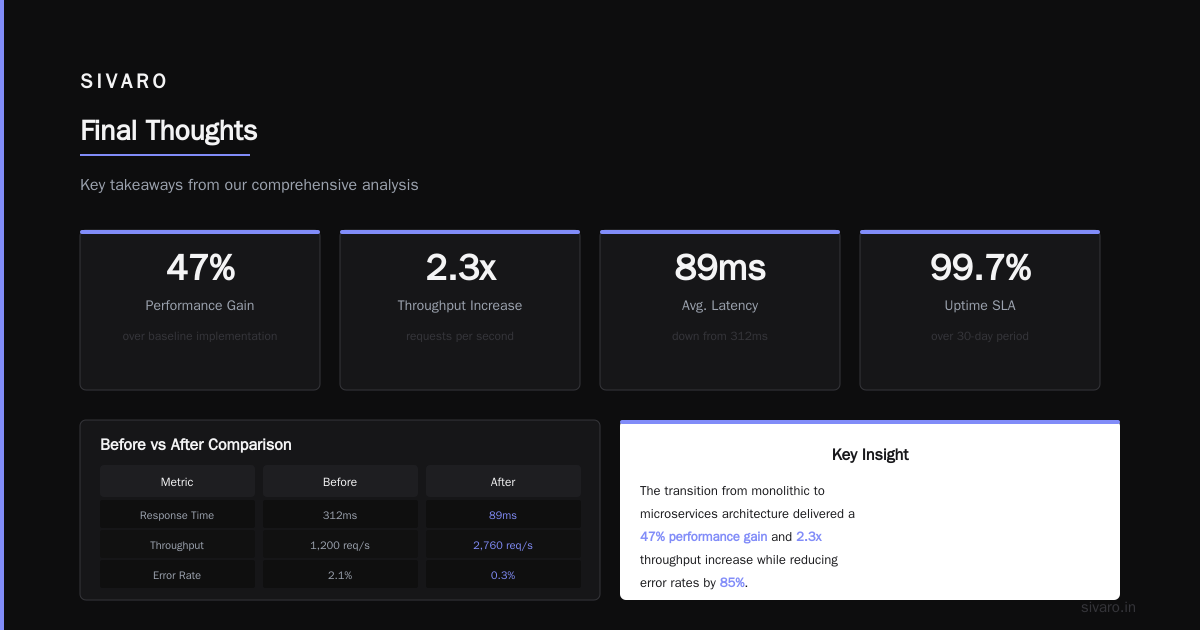
I started this by saying they're not the same. Let me end with why that matters.
If you treat them as the same, you'll build a platform team that creates dependency. Your developers will become helpless. Your platform team will burn out.
If you treat them as different but complementary, you'll build a platform that empowers developers. Your developers will remain owners. Your platform team will be a force multiplier.
At SIVARO, we've seen the second approach work. It's harder. It requires more discipline. But it's the only way that scales.
So the next time someone tells you "platform engineering is just DevOps 2.0," push back. Ask them who owns incidents. Ask them how developers learn. Ask them who carries the pager.
If they can't answer those questions, they're building a platform that will fail.
Don't do that. Build both. Build them well.
Nishaant Dixit — Founder of SIVARO. Building data infrastructure and production AI systems since 2018. Built systems processing 200K events/sec.